
URBAN COMMUNITIES ARE CREATING THEIR OWN SOLUTIONS

(Photo caption: Franklinton neighborhood in Columbus, OH.)
How urban communities are testing and scaling programs that address workforce, health, and economic barriers.
Across multiple states, the National Center for Urban Solutions (NCUS) has spent more than three decades developing and implementing programs designed to address those conditions, with a focus on workforce development, health access, and economic mobility.
Increasingly, NCUS leaders say the solutions emerging from their work are being shaped in real time at the community level rather than through traditional policy pipelines.
“The solutions we’ve developed at NCUS are grounded in what communities actually need,” said Drs. John and Pamela Gregory, founders of NCUS. “Our impact is strengthened when our partners, including policymakers, community leaders, and corporations, work alongside us through legislation, funding alignment, and community collaboration to build lasting infrastructure.”
NCUS describes its operating model as one built on proximity, maintaining direct engagement with residents in communities where barriers to employment, healthcare access, and economic mobility are most visible.
“When we saw barriers in workforce development and economic stability, we created NCUS TEC, our technical institution and career training center, to respond directly to that need,” said Drs. John and Pamela Gregory. “When we saw barriers in health access and the impact of preventable chronic conditions among Black men, we built the African American Male Wellness Agency, using a ‘clinic to the community’ model to bring care directly into the neighborhoods that need it most.”
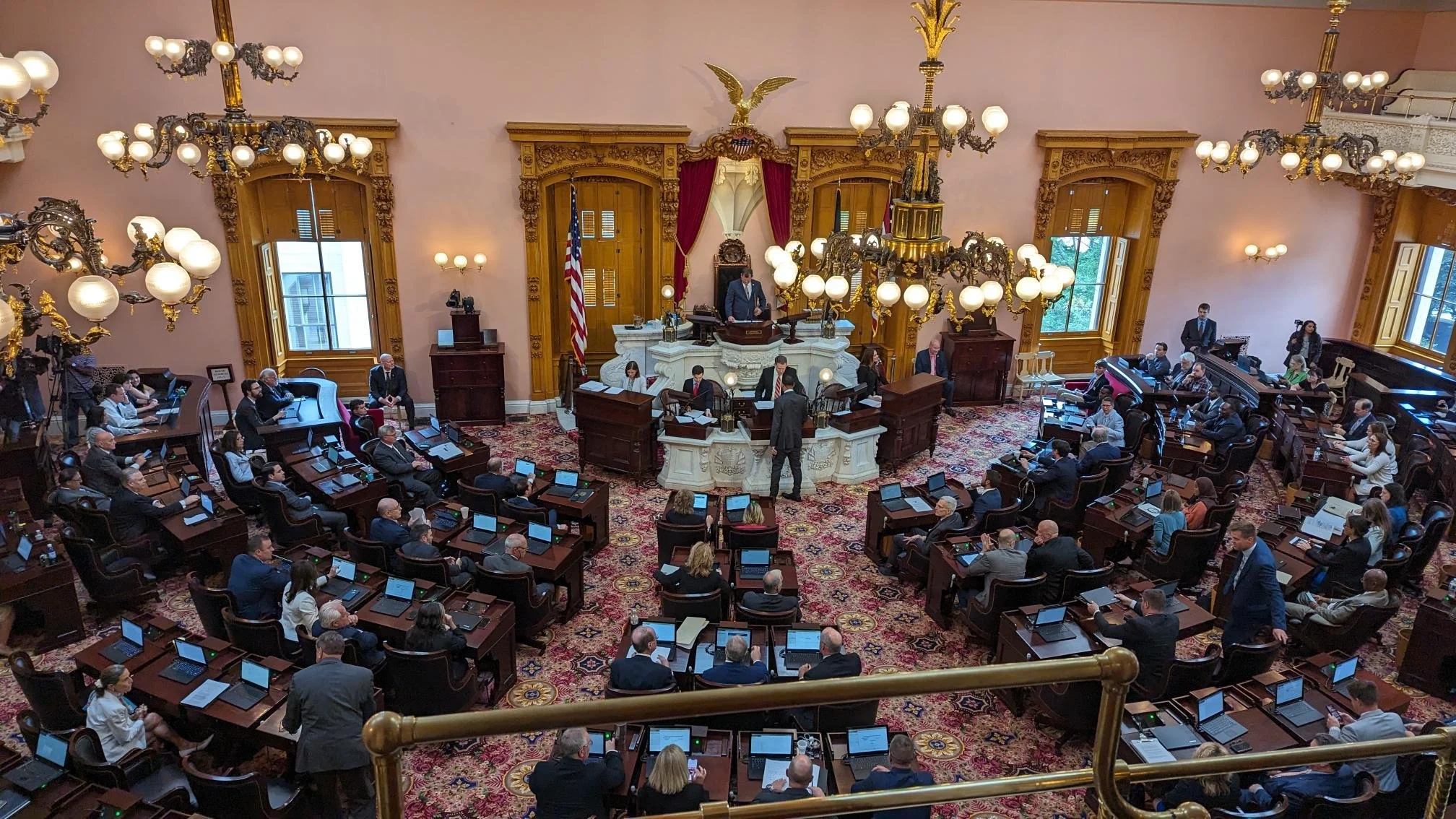
(Photo caption: Ohio House of Representatives meeting to discuss legislation.)
While federal, state, and municipal systems continue to play a central role in policy development, those systems often operate through longer legislative and regulatory timelines. Community-based organizations like NCUS function on shorter cycles, allowing programs to be tested and refined in real time.
At NCUS, program design is driven by ongoing engagement with residents across its national footprint. Rather than relying on multi-year policy development cycles, NCUS pilot’s programs in community settings and refines them based on outcomes, participation, and real-time feedback.
Organizations such as the Urban Institute have found that community-based organizations often demonstrate greater responsiveness to localized needs due to their proximity to residents and operational flexibility.
NCUS has also engaged in partnerships with healthcare and workforce organizations, including CareSource, Turner Construction, Google, and others to support the design and delivery of integrated health and economic mobility initiatives.
These collaborations typically involve shared program frameworks, coordinated service delivery models, and aligned performance measures aimed at improving access and outcomes in underserved populations.
“Turner’s partnerships with NCUS TEC has influenced the opportunity to close workforce gaps by ensuring training is aligned with evolving industry technologies and standards, providing hands-on experience and certifications recognized by employers, and working with global clients to provide training to the untapped workforce,” said Vanessa Jester, director of community and citizenship for Turner Construction.
Traditionally, urban communities have been home to a significant share of the untapped talent pool. According to Harvard Business School’s Project on Managing the Future of Work, 36 percent of employers report targeting individuals from less advantaged backgrounds as part of their hiring strategies. However, hiring outcomes for these populations remain limited, highlighting a gap between employer intent and actual workforce inclusion.
By operating in close proximity to socioeconomic challenges and developing solutions in real time, NCUS has built a level of community trust that increasingly positions the organization as a partner for legislators, corporations, and institutions seeking to scale workforce, health, and economic mobility strategies in urban communities.
What is emerging across urban communities is a more integrated approach to problem-solving, where community-based organizations and institutional systems operate in parallel rather than in isolation.
In this environment, urban communities are creating solutions on the ground, with organizations like NCUS helping test, refine, and scale those initiatives into broader systems that shape workforce, health, and economic outcomes nationwide.