
Before Bill Gates Warned About AI’s Impact on Jobs, a Socioeconomic Leader Was Already Building the Workforce From Untapped Talent
As artificial intelligence raises new questions about job displacement and the future of work, the National Center for Urban Solutions has spent years connecting untapped talent in underserved communities to the skills, technology, and career opportunities driving today’s economy.

(Caption: Billionaire Bill Gates warns that AI could transform the workforce faster than people can develop the skills needed to keep pace, with entry- and mid-level jobs facing some of the greatest risk.)
Bill Gates is warning that artificial intelligence could reshape the workforce faster than people can acquire the skills needed to adapt.
Gates writes that “the jobs at most risk are entry- and mid-level, and the new jobs being created will mostly require skills that take many years to learn.”
He raises concerns about significant job disruption and the possibility that traditional pathways into employment could disappear as AI advances.
The workforce challenges created by rapidly evolving technology, coupled with socioeconomic disadvantages that limit access to emerging opportunities, have long been a reality for certain communities. Yet those same communities represent a largely untapped pool of talent, and an opportunity to help fill the workforce gaps created as technology reshapes the economy.
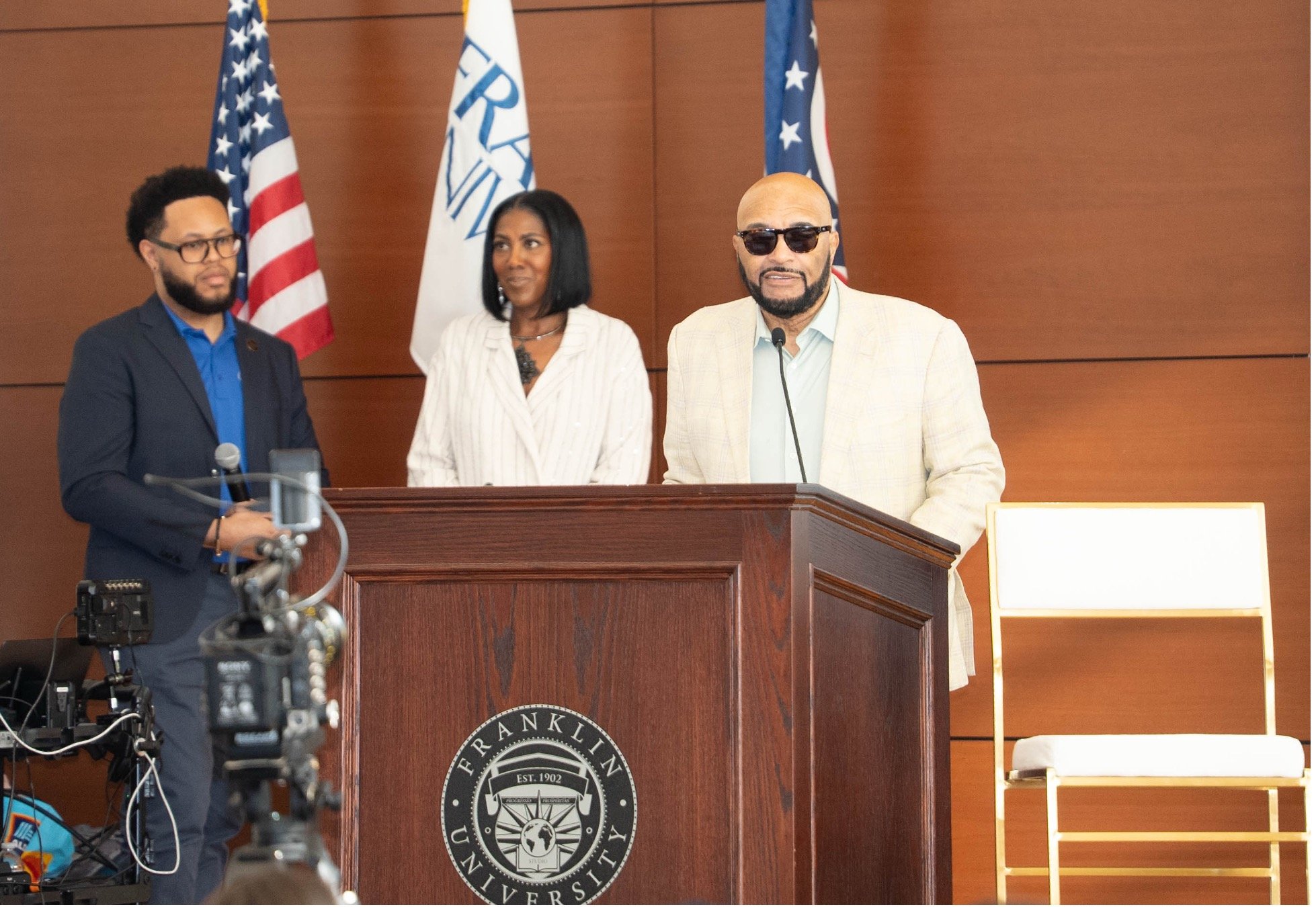
(Caption: Dr. John Gregory, founder and CEO of NCUS, speaks at NCUS TEC’s “AI Forward” event on April 30, 2026, calling for stronger pathways connecting untapped talent to the future of work.)
“There is an enormous amount of untapped talent in communities across this country, and that talent can be part of the answer to the workforce gap Bill Gates is warning about,” said Dr. John Gregory, CEO of the National Center for Urban Solutions (NCUS). “As technology changes jobs faster than workers can acquire new skills, we are partnering with corporations and community leaders to expand access to the training, technology and industry connections that prepare underserved populations for emerging opportunities.
For more than 30 years, our work has made sure communities are positioned to participate in the economic opportunities that lead to sustainable employment. Through NCUS’ technical institution, NCUS TEC, the organization has built pathways that connect untapped talent to training and career opportunities in technology, data-center infrastructure, advanced manufacturing, and clean energy.
NCUS TEC partners with Google by delivering the global technology company’s Google STAR program. Following the partnership's success, Google has supported NCUS TEC's expansion into Oklahoma and Arizona, helping extend its workforce-development model to additional communities. Google has contributed more than $2 million toward NCUS TEC's programming and expansion efforts.
The impact can be seen in workers across its footprint, including James Johnson in Columbus, Ohio. After losing his job in 2023 while earning approximately $35,000 to $40,000 annually, Johnson completed NCUS TEC's Broadband Futures program and earned advanced fiber-optics certifications.

(Caption: After earning advanced fiber-optics certifications through NCUS TEC, James Johnson turned new skills into a six-figure career supporting data center infrastructure.)
He now earns a six-figure salary working on infrastructure supporting the expansion of a Meta data center in New Albany, Ohio.
NCUS's role also extends beyond technical training. Microsoft is working with NCUS as a conduit between the technology company and communities, helping expand digital skills and knowledge in areas including computer science education and broadband access while supporting local economic development and job creation.

(Caption:Inside Microsoft’s Alpharetta, Georgia, office. NCUS is working with Microsoft to connect communities with digital skills, technology education and new career opportunities.)
In Douglasville, Georgia, NCUS is working with Microsoft to connect residents with technology-focused learning opportunities.
NCUS TEC also works with industry partners including EOS Energy to prepare workers for opportunities in clean energy and advanced manufacturing.
That perspective positions workforce development not simply as a response to job displacement, but as a way to ensure that technological advancement creates pathways to opportunity for communities and workers who have historically been overlooked.