
TACKLING DISPARITIES WHERE THEY HIT HARDEST - HEALTH, OPPORTUNITY AND COMMUNITY

(Photo caption: Neighborhood in Detroit, MI. Photo source: AP Photo/Paul Sancya.)
How NCUS Integrates Education, Wellness, and Personal Development to Address Urban Disparities
In cities across the United States, where historic patterns of segregation and economic inequality have shaped neighborhoods for generations, health outcomes often reflect deep structural disadvantage.
Residents in predominantly Black communities frequently experience poorer access to preventive care, higher rates of chronic conditions, and lower life expectancy compared with wealthier, more advantaged areas, patterns driven not by biology but by place and opportunity.
According to the National Library of Medicine, race‑specific gaps in life expectancy range from at least two to five years or more in many large cities, demonstrating persistent inequities over time.
In this context, the National Center for Urban Solutions (NCUS) has woven preventive health into its broader mission of closing opportunity gaps through education and workforce development.
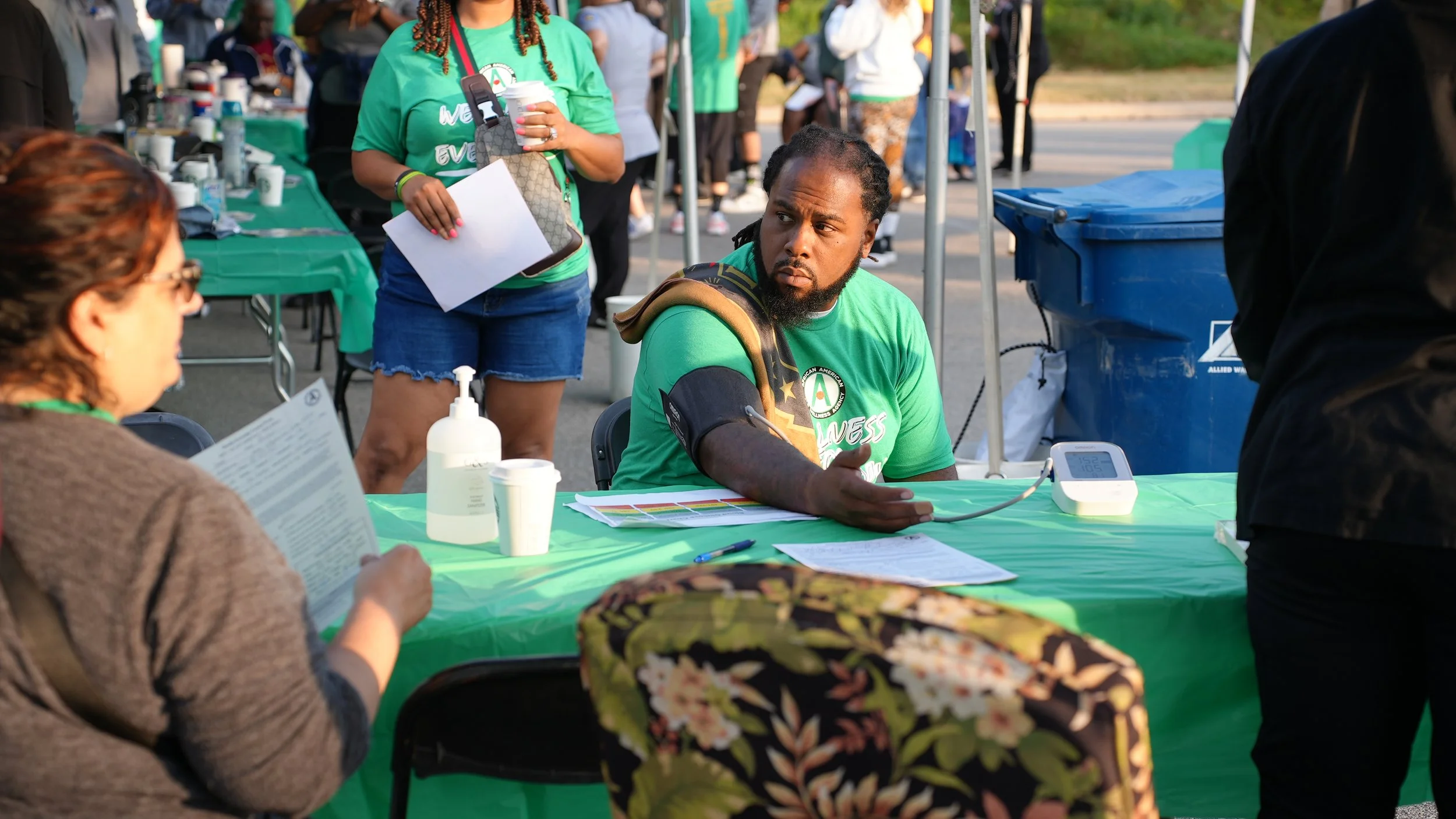
(Photo caption: Participant receiving health screening at Black Men’s Wellness Day Youngstown. Original photo)
Through the African American Male Wellness Agency (AAMWA), NCUS brings “the clinic to the community” with its Black Men’s Wellness Day, providing free health screenings and wellness education in more than 20 cities nationwide, including Columbus, Youngstown (Mahoning Valley), Charlotte, Houston, and Louisville. These cities reflect places where socioeconomic barriers and health disparities are stark.
“Too often, preventive care is a privilege instead of a right,” said Kenny Hampton, president of AAMWA. “By bringing trusted health services into neighborhoods, we help people understand their risk, connect to care, and take steps toward longer, healthier lives.”
In 2025 alone, NCUS engaged more than 100,000 participants through these wellness events, conducting over 10,000 health screenings, with many revealing elevated blood pressure and other silent risk factors that are major contributors to chronic disease.
The disparities these programs confront are rooted in the very makeup of urban America. Cities where Black Men’s Wellness Day takes place, such as Detroit and Atlanta are places where Black life expectancy remains significantly lower than White counterparts. Also, these are locations where chronic conditions like hypertension and diabetes are more prevalent due to entrenched social determinants of health.
NCUS’ approach recognizes that health and opportunity are deeply interconnected. Its preventive health strategy is designed to complement the organization’s work in education and economic mobility.
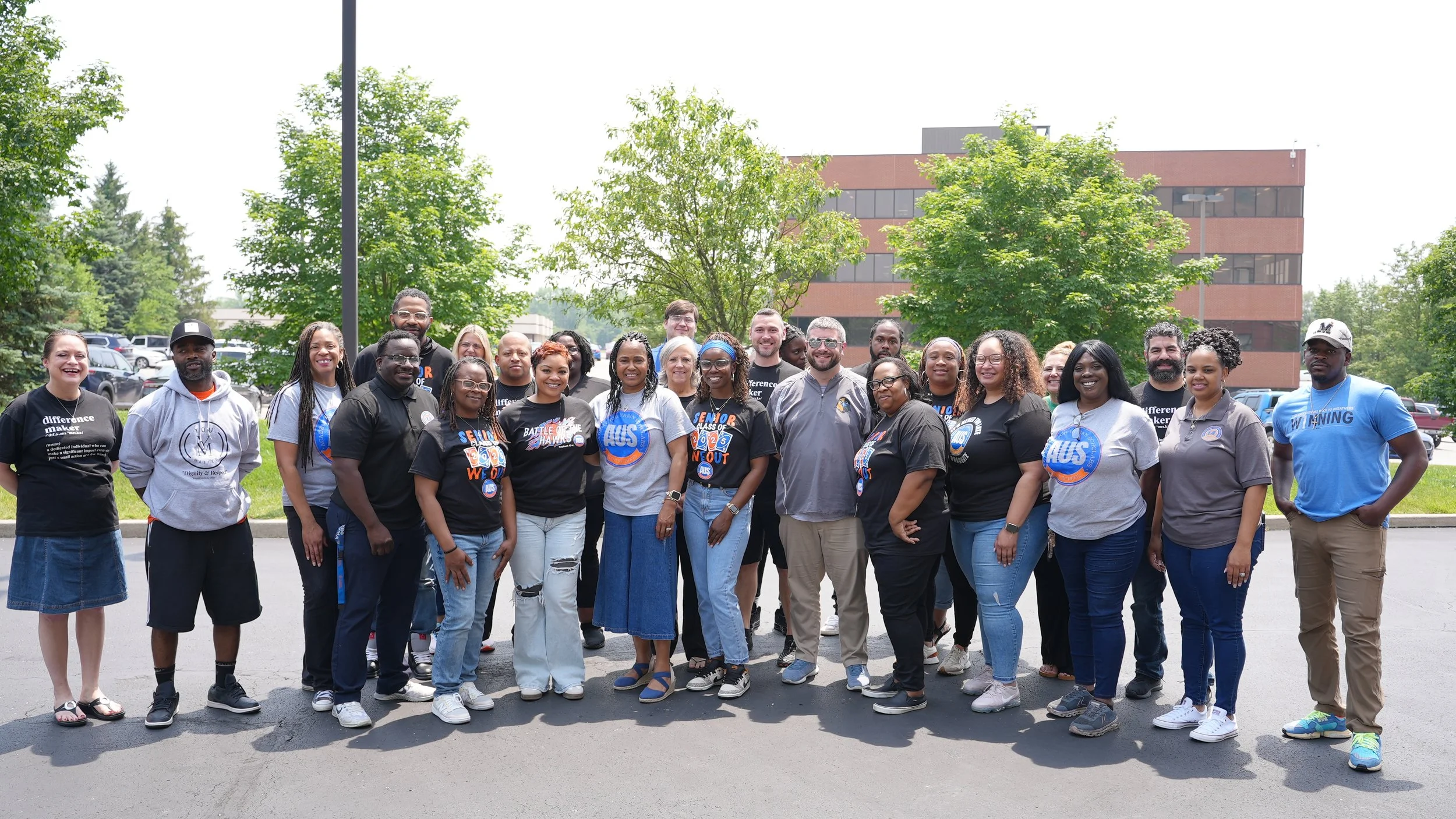
(Photo caption: Academy for Urban Scholars Staff. Original photo.)
At the Academy for Urban Scholars (AUS), students from communities marked by hardship receive nurturing, personalized instruction and mentorship in environments that prioritize social‑emotional growth and resilience. Integrated into that educational model is NCUS TEC, a technical institution and workforce development arm where learners, both youth and adults, gain industry‑aligned skills and certifications in high‑demand fields like IT, healthcare, construction, and advanced manufacturing.
According to NCUS leadership, this combination strengthens families and neighborhoods by linking well‑being with economic opportunity.
“When people are healthy, they can learn more, work more effectively, and participate fully in the economy,” said Dr. John Gregory, CEO of NCUS. “Closing health gaps is part of the same mission as closing education and workforce gaps, and it must happen where disparities are most entrenched.”
Studies show that where individuals live, especially in metropolitan areas with concentrated disadvantage, affects not just health but life chances across education, employment, and income. Programs like Black Men’s Wellness Day illustrate that bringing services directly into underserved neighborhoods, rather than expecting residents to navigate distant systems, can shift the trajectory of community health and opportunity.
By embedding health screenings, preventive education, and wellness support into the fabric of neighborhoods struggling with structural inequity, NCUS helps mitigate the long‑standing effects of segregation and economic marginalization. In doing so, it not only restores health where it has been compromised, but also strengthens the broader foundation on which educational success and economic mobility can be built.